Denim Tears Hoodie: Worth the Outlay? An Honest Breakdown of the Costs
It always lands in the same shape. Someone spots a cotton wreath hoodie on a group chat, checks the price, and instantly works out the quick mental sum against an unbranded fleece pullover costing a fifth as much. The comparison is a fair one, and it warrants a proper answer rather than either a dismissal or a sales pitch. What follows takes the maths seriously: what a Denim Tears hoodie costs in 2026, what you are really paying for, and where the value case survives and where it breaks. Read every figure below as an estimate or a range rather than a quotation, since the price varies by release, size, colourway and channel.
Established in 2019 by Tremaine Emory, Denim Tears builds its identity around a defining image, the cotton wreath, which refers specifically to cotton cultivation, the transatlantic slave trade and African-American history. That history is not a footnote added for marketing, and it is precisely why the garment takes the shape it does. A cost breakdown can coexist with that fact without flattening it, and the honest version of this analysis treats the design as substantive rather than as a logo that simply shifts product.
What It Costs denimtearsgermany.com/shorts-sweatpants in 2026
At retail in 2026, a standard cotton wreath pullover from Denim Tears estimates out at $250 to $400, with the heavyweight and seasonal versions at the top end. Nearer the top of that range you will find full-zip builds and pieces from collaborative capsules. Resale is a wider and messier picture entirely: common colourways sometimes go for less than retail, and sold-out drops for considerably more. Availability by size bends the numbers as well, because the middle sizes go first and the outer sizes are often discounted. For comparison, the brand’s jeans estimate around $300 to $500, tees roughly $100 to $200, and sweatpants somewhere near $250 to $350. Run a search for denimtears as one word and the identical spread shows up across resale listings — a useful sanity check before committing.
Line-Item Breakdown: Where Your Money Actually Ends Up
Split a roughly $300 hoodie into the parts that generate its cost and the total stops looking like one thing. The blank garment is the smallest slice and the easiest to underestimate: a genuinely heavyweight fleece body — typically 12 to 14 oz, or around 400 to 480 gsm — costs several times what a 280 gsm promotional blank does. Second comes decoration: a dense multi-colour wreath graphic burns through more screens, more passes and more rejects than a single-colour chest hit. The costs that never touch the garment come next: sampling, small production runs, design labour, distribution and the margin that keeps a small independent label solvent. Finally there is brand premium, which is genuinely there and which buyers should account for consciously instead of pretending away. What follows is an illustrative split, not a published cost sheet.
- Fleece body and construction, heavyweight: about 12 to 18 percent of the retail price
- Print work: development plus multiple passes: around 8 to 12 percent
- Overhead from design, sampling and short production runs: around 15 to 20 percent
- Wholesale, distribution and retail margin: around 30 to 40 percent
- The remaining share goes to brand premium and scarcity
The Cost-Per-Wear Number: The Arithmetic That Settles It
On its own, the retail price tells you little about value; cost per wear does the job properly. Split the purchase price across the number of realistic wears you will get over the years you own it, and the picture changes fast. Worn twice a week for four years, a $320 denim tears hoodie comes in under a dollar per wear, which is less than most people’s coffee habit. The identical hoodie, bought for an occasion, worn six times and shelved, works out at more than fifty dollars per wear. Fabric weight is doing real work here: 400 gsm-plus survives repeated washing far better than thin jersey and holds shape at the cuffs and hem where cheaper garments collapse first. The table below sets out four honest scenarios instead of one flattering one.
| Purchase scenario | Estimated 2026 price paid | Annual wears | Years in the wardrobe | Approximate cost per wear |
|---|---|---|---|---|
| Daily rotation staple | $320 | 90 | 4 | $0.89 |
| Travel and weekend piece | $350 | 35 | 5 | $2.00 |
| Statement piece, worn rarely | $400 | 12 | 3 | $11.11 |
| Purchased, worn twice, flipped | $380 less $250 recovered | 2 | 1 | $65.00 |
The Same Hoodie, Three Different Verdicts
The first buyer wears hoodies almost daily and owns four or five in heavy rotation. On pure arithmetic, that purchase defends itself, since it stands in for cheaper hoodies that would have needed replacing twice in that time. The second buyer wants one good layer for travel and weekends and otherwise dresses differently for work. Two dollars per wear is still comfortably reasonable, and the piece earns its shelf space. Buyer three is chasing a seasonal look and knows it will not last. Renting a moment is closer to the truth than buying a garment, and the budget should reflect that instead of borrowing the word investment.
Where the Argument Falls Down
There are honest arguments against the purchase, and leaving them out would turn this into an advertisement rather than a breakdown. Build quality at this price tier is good, though not categorically ahead of what a well-made $120 heavyweight blank gives you in stitching and fabric alone. By design the cut is boxy, so a trim silhouette is not on offer in any size — the drop shoulder sees to that. Print wear is the standard complaint in graphic streetwear, and repeated hot washing softens any dense graphic regardless of maker. Stock is inconsistent, which means the specific colourway you want may only exist on resale at a premium. And a plain denim hoodie or an unbranded fleece covers the pure function of staying warm for a fraction of the outlay.
The Resale Cushion Most People Ignore
Recoverable value rarely enters the calculation at all, and it materially changes the risk. Resale has generally been kind to the label’s established graphic pieces: in good condition, common colourways tend to sit around 60 to 85 percent of the original price. None of that is a guarantee, and none of it is investment advice; it is an observation about how the category has behaved for several years. What it means practically is that the downside of a purchase you fall out of love with is a partial loss rather than a total one. More than anything else, condition sets the recovery, so original tags, a cold wash and flat drying are what protect the figure. Rarer collaborative pieces behave less predictably in both directions, which cuts both ways.
The Bottom Line
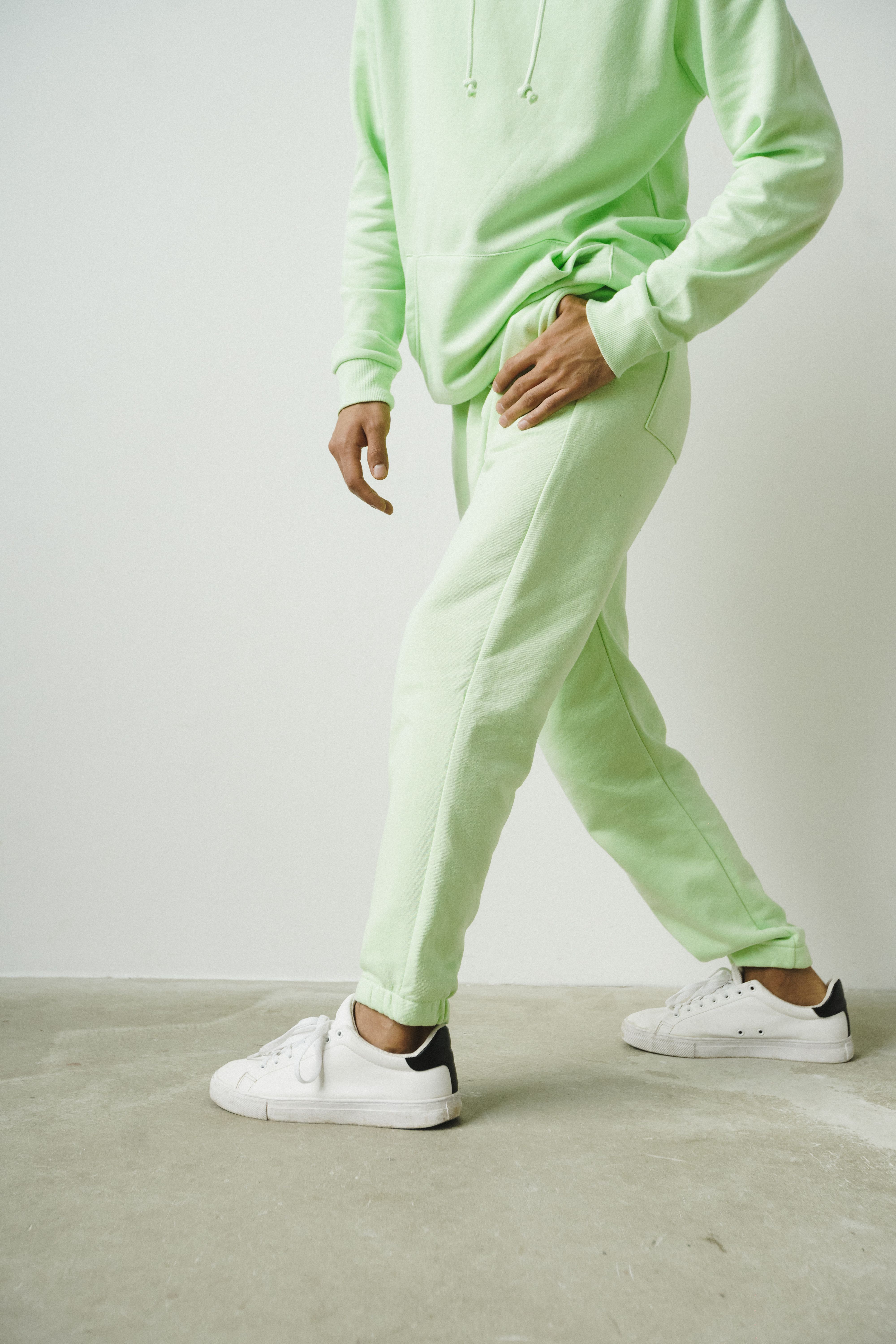
A Denim Tears hoodie earns its price if you live in hoodies, want a heavyweight piece you intend to keep for years, and treat the design as work rather than as a badge. It fails the test if you are buying to signal, if your taste rotates seasonally, or if buying it means stretching the budget. The wider catalogue — the denim tears jeans built on Levi’s 501s, the tees, the sweatpants many shoppers search for as denim tear pants — obeys the same logic, and the collaborations with Converse, Stüssy and Dior sit at the same premium tier. Treat it as clothing you will really wear, priced at a level you can absorb without flinching, and the numbers work. Buy it as an asset or as an obligation, and it will not. The best test here is a boring one: look honestly at the next thirty days, count the days you would reach for it, and let that count decide instead of the drop calendar.